
Why Our Skin Gets Dry in Winter And How to Actually Fix It
Share
If you’ve ever felt like your skin suddenly “stops listening” in winter — tight after washing, flaky around the nose, itchy on the cheeks, and dull no matter how much cream you put on — you’re not alone.
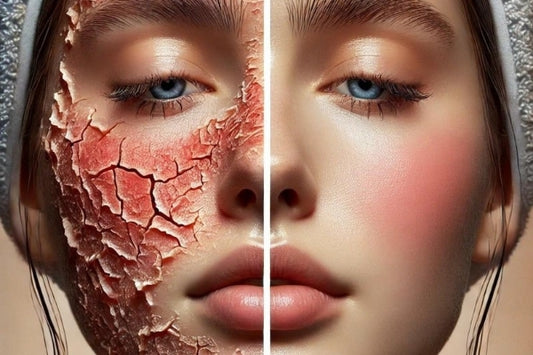
Dermatologists even have a name for it: winter xerosis – the medical term for winter-related dry skin. It happens because cold air, low humidity, indoor heating, and our daily habits all combine to pull water out of the skin and weaken its natural barrier.
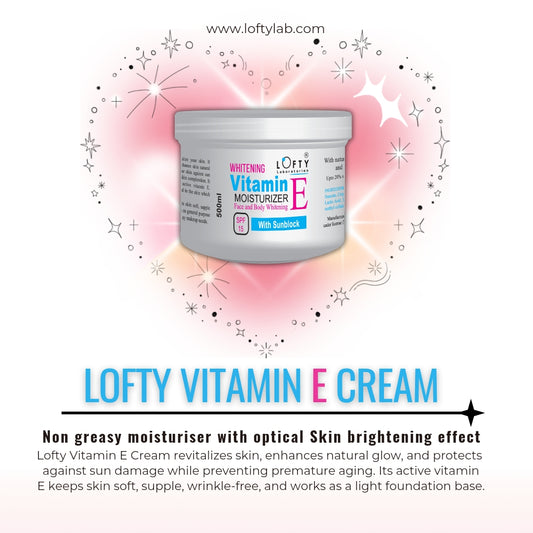
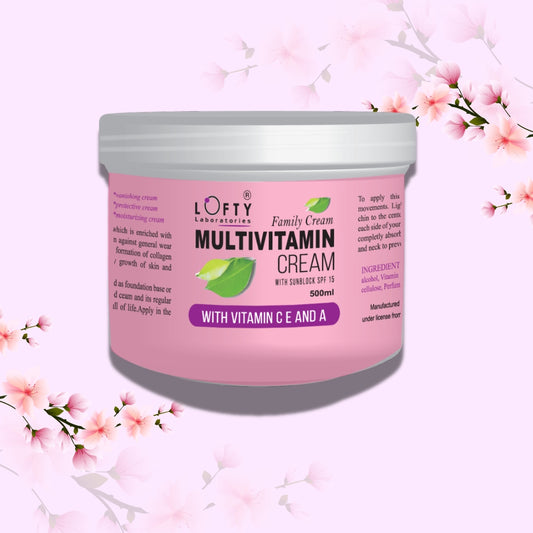
The good news? Once you understand why this happens, you can fix it with a smart routine and the right kind of cream — especially emollient-rich creams like Lofty Vitamin E Cream and Lofty Multivitamin Cream that are designed to lock moisture in, not let it evaporate off your face.
In this guide, we’ll walk through:
-
What winter actually does to your skin (backed by research)
-
Why light, watery moisturisers often fail in cold weather
-
The difference between humectants, emollients, and occlusives
-
How to build a simple winter routine using Lofty creams
-
Extra lifestyle tweaks that make a real difference
All in plain, easy-to-understand language.
1. The Science of Winter Dryness: What’s Really Happening to Your Skin?
1.1 Low Humidity = More Moisture Escaping from Your Skin
Warm air can hold more water vapour; cold air cannot. In winter, ambient humidity drops — outdoors and indoors. When humidity is low, water naturally moves from an area of higher moisture (your skin) to lower moisture (the air).
This outward movement of water is called trans-epidermal water loss (TEWL). Studies have shown that sudden changes from high humidity to low humidity can disrupt the skin barrier and increase TEWL, leaving skin drier and more vulnerable.
One review of seasonal skin changes found that winter conditions are associated with lower stratum corneum hydration (the outermost skin layer) and changes in barrier function, compared with summer.
Put simply:
When the air is drier, your skin loses more water — and faster.
1.2 Winter Xerosis: When Dryness Becomes a Pattern
“Winter xerosis” refers to dryness and flaking that appears or worsens in cold months due to increased water loss from the skin. It’s driven by:
-
Cold temperatures
-
Low ambient humidity
-
Wind exposure
-
Indoor heating
-
Harsh cleansing habits
The result? Rough texture, itching, tightness, and sometimes micro-cracking in the skin barrier.
1.3 Indoor Heating: Warm Room, Thirsty Skin
Heaters feel amazing… for you. But not for your skin.
Reverse-cycle air conditioners, oil heaters and other heating systems lower indoor humidity even further, creating what is basically a “moisture vacuum” around you. Health and skincare resources point out that heating dries the air and dehydrates the skin by depleting natural oils, which normally help trap water in the skin.
Some sources estimate that moisture can evaporate significantly faster in heated, dry rooms compared with neutral environments — especially when combined with low outdoor humidity.
That’s why you might notice:
-
Your face feels okay right after applying cream…
-
…but 20–30 minutes later, it’s tight and dry again — especially if you’re sitting near a heater.
1.4 Hot Showers: Comfort Today, Damage Tomorrow
In winter, long hot showers feel like therapy. Unfortunately, they’re not skin-friendly.
Hot water:
-
Dissolves the lipids (fats) in the outer skin layer
-
Strips away natural oils produced by sebaceous glands
-
Weakens the barrier that’s supposed to keep moisture in and irritants out
Research and dermatology articles on winter xerosis highlight hot showers and baths as a key factor that worsens dryness by dissolving epidermal lipids.
If your skin feels great in the shower and then rapidly tight, red or itchy after, this is likely what’s happening.
1.5 Reduced Sebum Production in Cold Weather
Sebaceous glands produce sebum — the oil that:
-
Lubricates the skin
-
Helps form part of the barrier
-
Reduces water loss
In winter, sebum production naturally decreases, especially on certain parts of the face and body. Dermatology resources report that this reduction in oils, combined with low humidity and wind, exacerbates moisture loss and barrier damage.
Less sebum means:
-
Less natural protection
-
Disrupted barrier
-
Faster moisture loss
-
More sensitivity and redness
Even people with combination or oily skin often say:
“My T-zone is still oily, but the sides of my face feel weirdly dry in winter.”
That’s barrier imbalance in action.
2. Why So Many Moisturisers Fail in Winter
You might be thinking: “But I already use a moisturiser. Why is my skin still dry?”
The answer often lies in what type of moisturiser you’re using — and what’s inside it.
2.1 Three Types of Moisturising Ingredients
Dermatology and skincare education resources generally group moisturising ingredients into three main categories:
-
Humectants – attract water into the skin (e.g. glycerin, hyaluronic acid, urea).
-
Emollients – smooth and soften the skin by filling gaps between skin cells (e.g. fatty acids, plant oils, esters).
-
Occlusives – form a physical layer on top of the skin to reduce water evaporation (e.g. petrolatum, waxes, heavier oils).
The most effective winter creams usually combine humectants + emollients + some occlusives to both draw in and lock water in the skin.
2.2 The Problem with Very Light, Watery Lotions
Many light or gel moisturisers are heavily water-based. Water itself feels refreshing and hydrating when you apply it — but in a low-humidity winter environment, that water can evaporate quickly.
If the formula is:
-
Very high in water
-
Low in emollients and occlusives
…then moisture isn’t being sealed in. It sits on the surface, feels nice for a moment, and then disappears into the air instead of into your skin.
That’s why you might notice:
-
“My moisturiser soaks in instantly but doesn’t do anything.”
-
“My skin looks fine for a few minutes but then it’s dry again.”
In winter, your skin doesn’t just need water placed on top — it needs oils, lipids and emollients that help rebuild and reinforce the barrier so the water can stay.
2.3 Why Emollient-Rich Creams Work Better in Winter
Studies on moisturisers show that combining occlusives and humectants significantly improves the skin’s ability to hold water, and adding the right emollients improves both feel and barrier recovery.
Benefits of an emollient-rich winter cream:
-
Fills microscopic cracks in the skin surface
-
Makes the outer layer smoother and more flexible
-
Reduces TEWL by supporting or adding to the lipid barrier
-
Keeps skin comfortable for longer (instead of 20–30 minutes)
This is exactly where Lofty Vitamin E Cream and Lofty Multivitamin Cream come in: they are designed as creams, not watery gels — with emollient structures that help lock moisture in the skin, not let it evaporate.
You can position them clearly as:
-
Lofty Vitamin E Cream – for normal, combination and dry skin
-
Lofty Multivitamin Cream – for extra dry skin or when the heater is on a lot
We’ll show you how to use both in a full winter routine in a moment.
3. How to Fix Dry Winter Skin: A Simple Routine That Actually Works
Let’s turn the science into something practical:
a step-by-step winter routine that’s easy to follow and easy to explain to customers.
We’ll break it into:
-
Morning routine
-
Evening routine
-
“SOS” extra-dry days
And at each step we’ll show where Lofty Face Wash & Cleanser, Lofty Vitamin E Cream, and Lofty Multivitamin Cream fit in.
3.1 Step 1 – Cleanse Gently (Don’t Start by Damaging the Barrier)
In winter, over-cleansing is one of the biggest hidden causes of dry skin.
What to avoid:
-
Harsh foaming cleansers with strong surfactants
-
Washing with very hot water
-
Scrubbing aggressively with towels or brushes
What to do instead:
-
Use a gentle, creamy cleanser that respects the barrier
-
Use lukewarm water (not hot)
-
Pat skin dry — don’t rub
In your brand ecosystem, that’s exactly where Lofty Face Wash & Cleanser fits:
A creamy, gentle cleanser that cleans the skin while helping it stay soft — the ideal first step before applying Lofty creams.
3.2 Step 2 – Choose the Right Cream for Your Skin Type
After cleansing, you want to trap the water that’s already on and in your skin. Dermatologists often recommend applying a moisturiser within a few minutes of washing to maximise hydration.
Here’s how to guide customers:
Option A: Normal, Combination or Dry Skin
Use Lofty Vitamin E Cream
Ideal when:
-
Skin feels dry or tight but not severely flaking
-
You’re in a cool or mildly heated environment
-
You want softness, comfort and glow without feeling too heavy
Position key benefits:
-
Emollient-rich formula helps lock moisture in the skin
-
Supports the barrier so hydration stays longer
-
Great daily winter cream for most skin types
Option B: Extra Dry Skin or Heavy Heater Use
Use Lofty Multivitamin Cream
Ideal when:
-
Skin feels very tight, rough, or “paper-like”
-
You use heaters or air conditioning for many hours a day
-
You live in a very cold, low-humidity environment
Position key benefits:
-
More nourishing and emollient for extra dry skin
-
Creates a “moisture seal” that helps guard against heater-induced dryness
-
Helps keep skin comfortable, even when indoor air is very dry
You can educate with a simple line:
Light hydrators mostly give water. Lofty creams give water and the emollients needed to hold it inside the skin.
3.3 Step 3 – Morning Routine (Winter Version)
Morning Steps:
-
Cleanse
-
Rinse face with lukewarm water.
-
If you need a proper cleanse (e.g. after night products), use a small amount of Lofty Face Wash & Cleanser.
-
-
Treat (Optional)
-
Apply any serum or treatment your routine needs (e.g. brightening, anti-ageing).
-
Avoid harsh acids every day in very dry months.
-
-
Moisturise
-
For normal/combination/dry: apply Lofty Vitamin E Cream.
-
For extra dry or heater-heavy days: use Lofty Multivitamin Cream.
-
Gently massage until absorbed; focus on cheeks, around the mouth, and any tight areas.
-
-
Protect
-
During daytime, always add sunscreen, even in winter. UV damage still happens when it’s cold or cloudy.
-
3.4 Step 4 – Evening Routine (Repair Mode)
Night is when skin repairs itself — and winter is when it needs this the most.
Evening Steps:
-
Remove makeup & sunscreen
-
Use a gentle cleanser; double-cleanse if you’re wearing heavy makeup, but keep products mild.
-
-
Cleanse with Lofty Face Wash & Cleanser
-
Use lukewarm water and massage gently. No aggressive scrubbing.
-
-
Treatment (Optional)
-
If you use retinoids or actives, winter is the time to listen to your skin. Cut back if you see irritation or increased dryness.
-
-
Moisturise generously
-
Normal/combination/dry: Lofty Vitamin E Cream
-
Extra dry or irritated: Lofty Multivitamin Cream
-
This is the time to be more generous — night is “recovery time” for your skin barrier.
-
-
Extra tip:
-
If your skin is very dry, you can lightly layer Lofty Vitamin E Cream first and then a thin layer of Lofty Multivitamin Cream on top in the worst areas (cheeks, sides of the mouth, forehead lines).
-
3.5 “SOS Winter Skin” – When Things Are Really Bad
If your skin hits crisis mode — red, rough, maybe starting to flake — keep it simple:
-
Stop harsh scrubs and strong acids
-
Short, lukewarm showers only
-
Use Lofty Multivitamin Cream twice a day for a few days
-
Avoid fragranced or stripping cleansers
Barrier-repair focused moisturisers with humectants and emollients have been shown to improve hydration and reduce TEWL, especially when used regularly.
This is exactly the role your winter Lofty creams can occupy in your brand story: barrier hero products.
4. Extra Lifestyle Tweaks That Help Winter Skin
Creams do a lot — but a few simple habits can make them work even better.
4.1 Shorter, Lukewarm Showers
As we covered earlier, very hot water strips natural lipids and damages the barrier, which leads to more water loss.
Try:
-
5–10 minute showers
-
Warm, not steaming-hot water
-
Gentle body washes
-
Applying body cream or lotion within a few minutes of drying off
4.2 Manage Indoor Air
While some studies suggest humidification has limited measurable effect on dryness symptoms in some environments, very dry indoor air is still recognised as a factor in dehydrated skin.
You can suggest:
-
Avoid sitting directly in front of heaters
-
Keep room temperature comfortable, not extreme
-
If possible, use a humidifier in very dry rooms or add a bowl of water near heaters as a low-tech option
-
Open windows briefly during the day for fresh air and air-exchange when practical
4.3 Fabrics and Friction
Rough fabrics and constant friction can further irritate winter skin:
-
Choose softer fabrics (cotton layers under wool sweaters)
-
Avoid scarves that constantly rub against your face if your skin is irritated
-
Change pillowcases regularly; build-up of products and dust can annoy already sensitive skin
4.4 Hydration and Nutrition
Your skin is part of your body — so inside-out support matters:
-
Drink enough water throughout the day (especially if you’re in heated, dry rooms)
-
A balanced diet with healthy fats (like omega-3 from fish, flaxseed, walnuts) supports the lipid barrier from within
-
Excessive alcohol and smoking can worsen dryness and dullness over time
These aren’t magic fixes, but they support everything your topical routine is doing.
5. SEO-Friendly FAQ: Winter Dry Skin & Moisturiser Myths
Q1: Why is my skin suddenly so dry in winter even though I didn’t change my skincare?
Because the environment changed, not your face.
Lower humidity, colder temperatures, wind, heaters, and hot showers all combine to pull more water out of your skin and weaken the barrier. Research on winter skin consistently shows lower hydration and altered barrier function in cold months compared with warmer seasons.
So the same routine that worked in summer isn’t strong enough in winter.
Q2: Do I need a different moisturiser in winter?
For most people: yes.
Summer might allow you to get away with a light, water-based gel. In winter, your skin usually needs:
-
More emollients
-
Slightly richer textures
-
Barrier-supporting ingredients
That’s where switching to Lofty Vitamin E Cream (for normal/combination/dry) or Lofty Multivitamin Cream (for extra dry skin) gives a noticeable difference — because you’re supporting the barrier, not just adding water.
Q3: What’s better in winter — lotion, gel, or cream?
In dry, cold conditions, creams almost always outperform very light gels or lotions for dryness.
Why?
-
Creams usually contain more emollients and occlusives, which support the barrier and reduce water loss. PMC+1
-
Gels and very light lotions are more water-heavy and can evaporate quickly in low humidity.
A good strategy:
-
Use lighter textures in humid, warm weather
-
Use richer creams (like Lofty Vitamin E Cream / Lofty Multivitamin Cream) in cold, dry seasons
Q4: How many times a day should I moisturise in winter?
It depends on your skin and environment, but a good general rule:
-
At least twice daily – morning and night
-
Extra application if you feel tightness after being in a very dry or heated environment
Dermatology organisations recommend regular use of emollients, often twice daily or more, to manage dry skin and support barrier function.
With Lofty, you can suggest:
-
Morning: Lofty Vitamin E Cream or Lofty Multivitamin Cream
-
Night: slightly thicker layer of the same cream
-
Extra: small touch-ups on very dry spots during the day if needed
Q5: Can I over-moisturise?
You can overdo actives (like acids, retinol), but for dry skin in winter, regular emollient moisturising is usually beneficial, especially when skin is already compromised.
You don’t want to clog pores with very heavy products if you’re acne-prone, but using an appropriate cream — in the right amount, for the right skin type — is essential in protecting the barrier.
That’s why having two levels (Lofty Vitamin E Cream vs Lofty Multivitamin Cream) is smart:
-
One for regular winter dryness
-
One for more intense dryness or heater-heavy environments
6. Bringing It All Together: Your Winter Skin Strategy
Let’s summarise the key points in a way your customers (and Google) will love:
-
Winter dry skin (winter xerosis) is caused by:
-
Low humidity
-
Cold winds
-
Reduced sebum production
-
Indoor heating
-
Hot showers and harsh cleansers
-
-
These factors increase trans-epidermal water loss and weaken the skin barrier.
-
Light, water-heavy moisturisers often evaporate too quickly in dry air, leaving your skin dry again soon after.
-
The solution is emollient-rich, barrier-supporting creams that lock in moisture:
-
Lofty Vitamin E Cream for normal, combination and dry skin
-
Lofty Multivitamin Cream for extra dry skin and heater use
-
-
Combine the right cream with:
-
Gentle cleansing
-
Short, lukewarm showers
-
Smarter heater use and simple humidity hacks
-
Softer fabrics and a balanced lifestyle
-
…and you can turn winter from your skin’s worst enemy into just another season.